
How Families Can Choose Safe Senior Living When Dementia Care Needs Increase
What families should know when safety and memory loss become part of the search
Choosing senior living for a loved one is never simple, and the decision becomes even more urgent when dementia changes behavior, judgment, or safety awareness. Families often start by comparing amenities, meals, and location, but the most important question is whether a community can provide the right level of support day and night. For someone living with memory loss, confusion, wandering risk, or agitation, the wrong environment can increase stress for everyone involved. The right setting, by contrast, can support dignity, reduce crisis calls, and help caregivers feel confident that help is close by. This guide explains how to evaluate assisted living, memory care, skilled nursing, independent living, and respite care so you can match care needs with the safest possible environment.
What matters most when a loved one needs more supervision
- Care level must match daily needs – A community should be able to support activities of daily living (ADLs) such as bathing, dressing, eating, toileting, and mobility.
- Memory support should be intentional – People with dementia often need structured routines, secure spaces, and staff trained in redirection and de-escalation.
- Staffing and response time matter – Ask how many team members are on duty, how emergencies are handled, and whether care is available overnight.
- Environment can reduce risk – Clear layouts, secured exits, and calm activity programming can lower confusion and wandering concerns.
- Families should review services carefully – Policies on behavior changes, medication management, and outside clinical support can affect safety.
Why dementia can change the right senior living choice
Dementia can affect memory, judgment, communication, and impulse control. As symptoms progress, a person may need more than help with household tasks. They may require direct supervision, cueing, and skilled observation to stay safe. In some cases, a person who once did well in independent living may now need assisted living or memory care because they are forgetting meals, misusing medications, or becoming disoriented in familiar spaces.
This is also why families should not assume every retirement community offers the same level of support. Some communities focus mainly on social living and convenience, while others provide specialized memory care or access to skilled nursing. Understanding those differences can help you avoid an emergency move later.
Comparing the major care options
Independent living
Independent living is best for older adults who can manage most daily tasks on their own but want fewer household responsibilities and more social connection. It may include dining, housekeeping, transportation, and activities. However, it usually does not provide hands-on help with ADLs or close supervision for dementia-related safety concerns.
Assisted living
Assisted living supports residents who need help with some ADLs but do not require intensive medical care around the clock. This option may work well for someone in the early stages of cognitive decline if the community can provide medication reminders, structured routines, and help with bathing or dressing. Families should ask whether the community has specific training for dementia care and what happens if a resident becomes more confused or behaviorally distressed.
Memory care
Memory care is a specialized setting designed for people with Alzheimer’s disease or other forms of dementia. These programs often feature secure entrances, simplified layouts, cueing strategies, and staff trained to support residents with memory loss. If a loved one has wandering risk, sundowning, or increased agitation, memory care may provide a safer environment than standard assisted living.
Skilled nursing
Skilled nursing offers a higher level of medical oversight and may be appropriate when a person has complex health conditions, recent hospitalization needs, wound care, rehabilitation needs, or advanced cognitive decline combined with medical fragility. If behavior changes are tied to new medical issues, skilled nursing can sometimes provide closer clinical monitoring than a residential setting.
Respite care
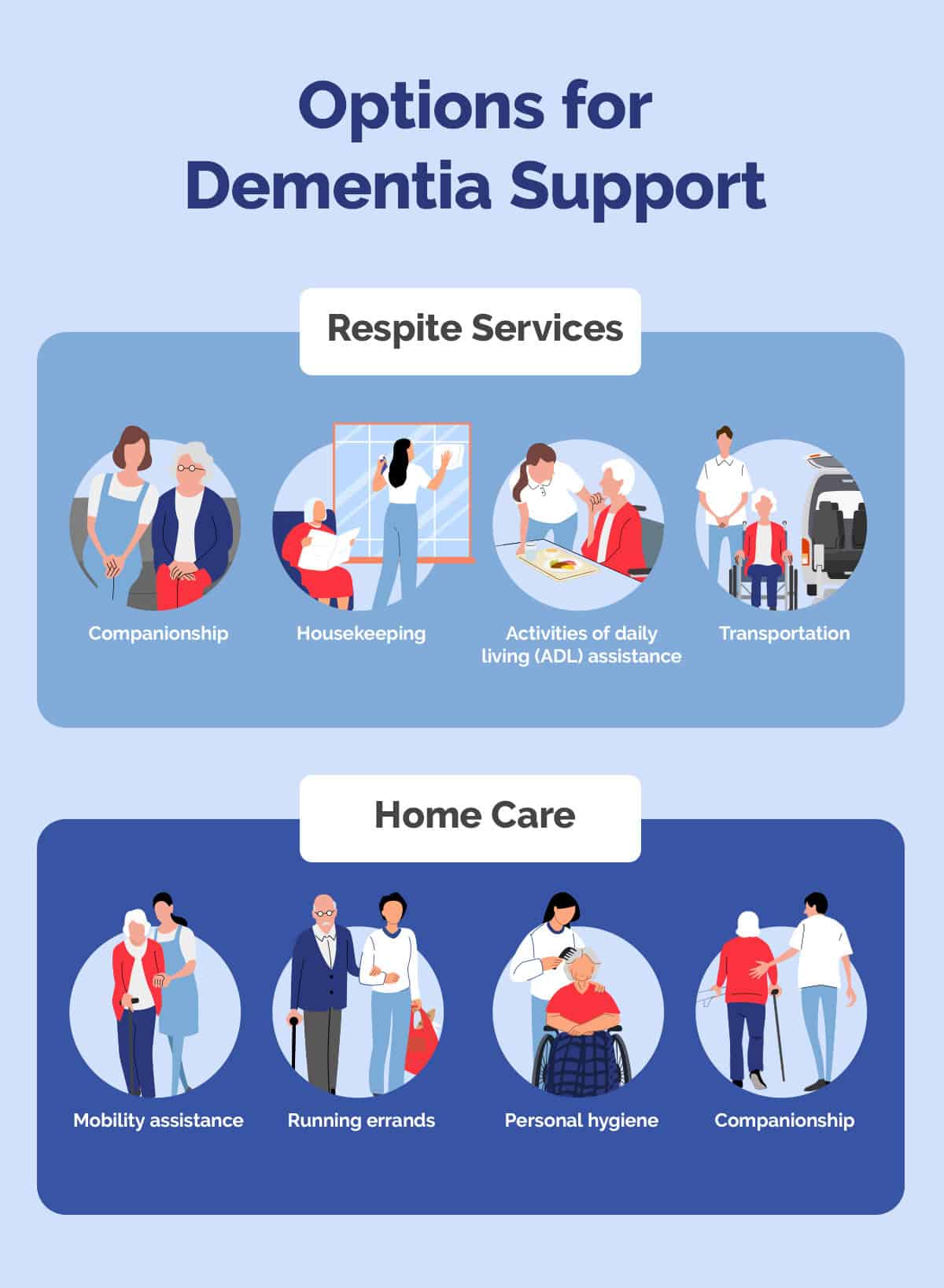
Respite care is a short-term option that can support family caregivers during travel, recovery, or burnout. It is also a useful way to test whether a community is a good long-term fit. For a person with dementia, a brief stay can reveal whether the staff understands routines, communication preferences, medication schedules, and triggers that may lead to stress or aggression.
Questions every family should ask on a tour
A tour is the time to move beyond brochures and ask practical questions. The answers can help you understand whether the community is truly prepared for your loved one’s needs.
- How do you assess a new resident’s cognitive and physical needs?
- What training do staff receive in dementia care and behavior support?
- How do you respond if a resident becomes confused, refuses care, or becomes aggressive?
- What is your staffing pattern during evenings, weekends, and overnight hours?
- How do you help residents with ADLs such as bathing, dressing, and toileting?
- Do you offer memory care, or would a resident need to transfer if needs increase?
- How are medications managed and monitored?
- What fall-prevention and wandering-prevention systems are in place?
- Can families see a sample activity calendar?
- Are there options for pet-friendly senior living if a companion animal is part of the care plan?
How to recognize a safer environment
A high-quality community will be transparent, patient, and specific. It should be able to explain how it handles changes in behavior, when it involves families, and what steps it takes to keep residents engaged and safe. Look for signs of consistency such as visible team members, calm communication, clean and easy-to-navigate spaces, and meaningful activities rather than passive supervision alone.
For people with dementia, the best communities often combine structure with warmth. That may include music, familiar routines, life-skill stations, small-group events, and opportunities for movement and social connection. These supports can lower agitation and improve quality of life while also making it easier for staff to notice changes early.
When cognitive decline increases the risk of wandering, missed medications, or conflict with others, the safest community is not simply the one with the nicest amenities – it is the one with the right level of supervision, training, and responsiveness.
Red flags families should not ignore
During your search, be cautious if a community seems vague about dementia training, downplays behavior changes, or cannot explain how it handles emergencies. Other warning signs include overpromising care without explaining limits, limited engagement programming, or a lack of clear transition plans if needs increase. A community that cannot confidently explain its scope of service may not be prepared for a resident whose condition is changing quickly.
Families should also be careful if a loved one is already showing signs that standard assisted living may not be enough. Frequent wandering, repeated falls, inability to follow simple directions, or worsening confusion may signal the need for a more specialized memory care setting or even skilled nursing, depending on medical complexity.
Balancing comfort, safety, and family peace of mind
The goal is not only to find housing. It is to find the right daily environment for your loved one’s current and future needs. A strong senior living community should preserve dignity while offering real support. That may mean choosing memory care over independent living, or selecting assisted living with a clear path to higher care if needs change. In some situations, respite care can provide a bridge while the family decides on a longer-term plan.
It is also worth asking about social life, meals, transportation, spiritual support, and pet policies. These details matter because quality of life can influence cooperation, mood, and overall wellbeing. For some older adults, pet-friendly senior living can make a major difference in comfort during a difficult transition.
Next steps for families making this decision
Start by writing down the person’s current abilities, recent incidents, medical conditions, and support needs. Then compare communities based on staffing, training, supervision, and services, not just price or appearance. If possible, visit more than once and speak with staff on different shifts. Ask whether the community can adapt as your loved one’s needs change, and get any promises in writing. When a family is evaluating senior living for someone with dementia, the best choice is usually the place that is honest about what it can provide today and flexible enough to respond tomorrow.

Written by
Rachel Kim
Senior Research Lead at NearbySeniorLiving.com. Rachel brings over a decade of experience in senior care research, helping families navigate the complex landscape of care options with evidence-based guidance. Her work focuses on translating clinical research into practical advice for family caregivers.