
What Families Should Know About Hospice Quality, Senior Living Options, and Care Transitions After Ownership Changes
When a Care Provider Changes Hands, Families Need Clear Answers
For families navigating senior living decisions, a change in ownership at a hospice or post-acute care provider can raise urgent questions about staffing, communication, and the consistency of support. In elder care, even small disruptions can affect comfort, symptom management, and the ability to meet a loved one’s daily needs. That is why decision-makers should understand how shifts in management may influence service quality across the care continuum, from assisted living and memory care to skilled nursing and respite care. If your family is comparing a retirement community, evaluating independent living, or looking for pet-friendly senior living, it helps to know what to ask before care needs become more complex. The goal is not only to find a safe place, but to find a trusted partner that can adapt as health needs change.
What Families Should Watch For After an Ownership Change
When a provider is acquired by a larger company or private equity firm, the most important question is whether resident and patient care remains the top priority. Families should pay attention to staffing patterns, response times, and whether current team members are still in place. In hospice and other high-touch care settings, continuity matters because caregivers learn preferences, routines, and subtle changes in condition over time.
Look for signs of stress in the system, such as rushed visits, delayed callbacks, or vague answers about who oversees care. In senior living, those concerns can affect everything from medication support to help with bathing, dressing, and mobility. In a skilled nursing environment, they may also influence rehabilitation progress and clinical monitoring. In any setting, consistency is a marker of trust.
Families should never hesitate to ask how ownership changes affect staffing, care plans, and clinical oversight. A good provider will answer clearly and welcome questions.
Essential Factors to Review Before Choosing a Senior Care Setting
Whether you are comparing assisted living, memory care, or a retirement community, the best choice depends on the older adult’s health, lifestyle, and level of support. Start by identifying which activities of daily living (ADLs) your loved one can manage independently and where help is needed. ADLs typically include bathing, dressing, eating, toileting, transferring, and continence support. Once you understand those needs, you can better match the setting to the person.
1. Staffing and supervision
Ask about caregiver-to-resident ratios, nurse coverage, and turnover. Higher staffing stability often supports better relationships and safer care. This is especially important in memory care, where residents may need more frequent cueing, redirection, and supervision.
2. Communication and family involvement
Strong providers keep families informed about changes in condition, medication updates, and care planning. Look for a team that offers regular updates and a clear point of contact. This is valuable in hospice, but it also matters in assisted living and skilled nursing, where care needs can shift over time.
3. Care transitions and flexibility
A resident may begin in independent living and later require more support. Ask whether the community can coordinate transitions to assisted living, memory care, or a higher level of care if needed. A well-run retirement community should make those changes smoother, not more stressful.
4. Environment and daily life
Quality of life matters. Check whether the community provides engaging activities, meals that meet dietary needs, transportation, and social opportunities. For many older adults, the availability of pet-friendly senior living can also make a meaningful difference in emotional wellbeing and adjustment.
5. Hospice and end-of-life coordination
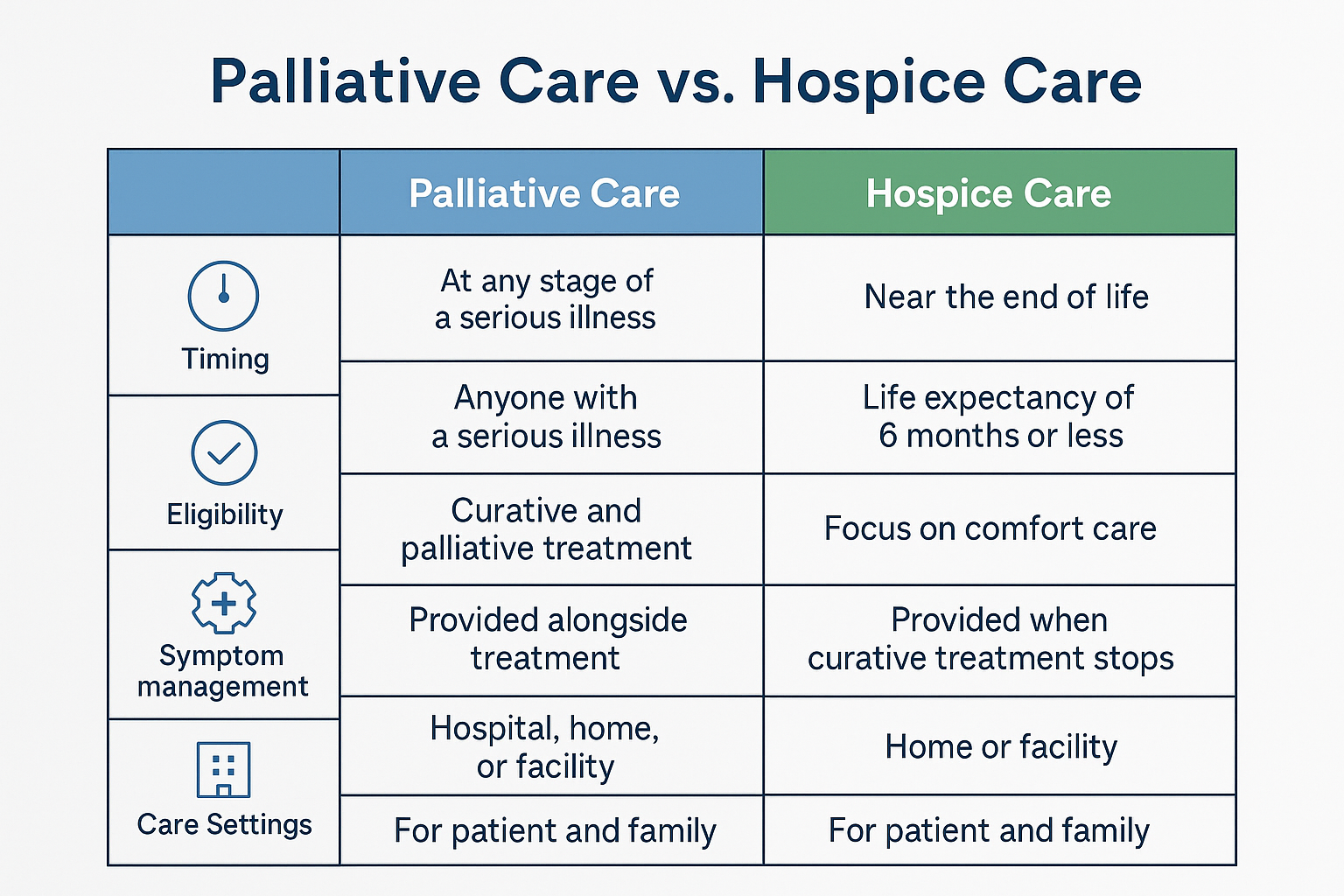
If hospice care may be needed in the future, ask how the community partners with outside providers and how comfort care is handled. Families should understand how pain management, symptom relief, and spiritual or emotional support are coordinated across teams.
Questions Families Can Ask During Tours or Care Consultations
Good questions can reveal whether a provider is prepared to support your loved one with dignity and consistency. Consider asking:
- How has staffing changed in the past year?
- Who oversees care plans and how often are they reviewed?
- How do you communicate with families about health changes?
- What support is available for ADLs and medication management?
- How do you handle memory loss, wandering risk, or behavioral changes?
- Can residents move between independent living, assisted living, memory care, and skilled nursing if needs increase?
- What role do outside hospice providers play if comfort care is needed?
- Are pets allowed, and what pet-friendly senior living policies are in place?
These questions can help you compare providers on more than price or appearance. They focus attention on safety, responsiveness, and the ability to deliver individualized care.
How to Compare Senior Living Options With Confidence
Families often start with one type of community, then discover that another level of care is a better fit. For example, independent living may work well for an active older adult who wants fewer home responsibilities, while assisted living may be better for someone who needs help with meals, bathing, or reminders. Memory care offers specialized support for people living with Alzheimer’s disease or other forms of dementia. Skilled nursing may be appropriate when medical needs, rehabilitation, or 24-hour nursing care are required.
The right choice depends not only on the diagnosis, but on how well the community can respond to changing needs. Ask whether assessments are updated regularly and whether the care team includes licensed nurses, therapy services, and family communication support. If your loved one values companionship, look for programs that encourage social connection and meaningful routines. If they have a companion animal, ask specifically about pet-friendly senior living policies, fees, and restrictions.
Why Trust and Transparency Matter More Than Ever
In elder care, trust is built through transparency. Families deserve straightforward information about staffing, services, pricing, and ownership changes. Providers that are open about challenges and improvements usually make better long-term partners than those that avoid difficult questions. This is true whether you are considering hospice, assisted living, or a continuing care retirement community.
The most dependable senior care providers do three things well: they communicate clearly, they adapt when needs change, and they keep the person at the center of every decision. That standard should guide every tour, consultation, and care review.
A Practical Next Step for Families
If you are evaluating care after news of a takeover or any major operational change, request an updated care meeting and bring a checklist of questions. Review how the provider supports ADLs, what training caregivers receive, how emergencies are handled, and how family members stay informed. If you are comparing senior living communities, visit more than once and talk with residents and staff when possible.
Choosing between independent living, assisted living, memory care, skilled nursing, respite care, or hospice support can feel overwhelming, but the right questions make the process more manageable. Focus on care quality, communication, and the ability to serve your loved one now and in the months ahead.

Written by
Rachel Kim
Senior Research Lead at NearbySeniorLiving.com. Rachel brings over a decade of experience in senior care research, helping families navigate the complex landscape of care options with evidence-based guidance. Her work focuses on translating clinical research into practical advice for family caregivers.