
What Families Should Know About Active Adult Communities in Texas and How They Compare to Senior Living Options
Why Active Adult Communities Are Part of the Senior Living Conversation
For many families, choosing the right senior living option starts with understanding what level of support an older adult really needs. Active adult communities can be appealing for people who want a maintenance-light lifestyle, social connection, and access to amenities without the daily services found in assisted living or skilled nursing. In Texas and across the country, these communities are increasingly part of the broader senior housing landscape because they serve older adults who are still largely independent but want convenience, safety, and community.
That said, active adult communities are not the same as a retirement community with care services, nor are they a substitute for memory care or skilled nursing when health needs increase. Families evaluating options should look closely at current needs, future flexibility, and how well a community supports aging in place. Understanding these differences can help adult children and older adults make a choice that feels practical today and sustainable tomorrow.
What Families Should Keep in Mind
- Active adult communities are typically designed for independent older adults, not residents who need daily medical or personal care.
- Assisted living may be a better fit when help is needed with activities of daily living (ADLs) such as bathing, dressing, or medication reminders.
- Memory care provides specialized support for individuals living with Alzheimer’s disease or other forms of dementia.
- Skilled nursing offers a higher level of clinical care for short-term rehabilitation or ongoing health needs.
- Pet-friendly senior living, amenities, and social opportunities can improve quality of life, but they should be weighed alongside safety, access to care, and future needs.
How Active Adult Communities Differ from Other Senior Living Options
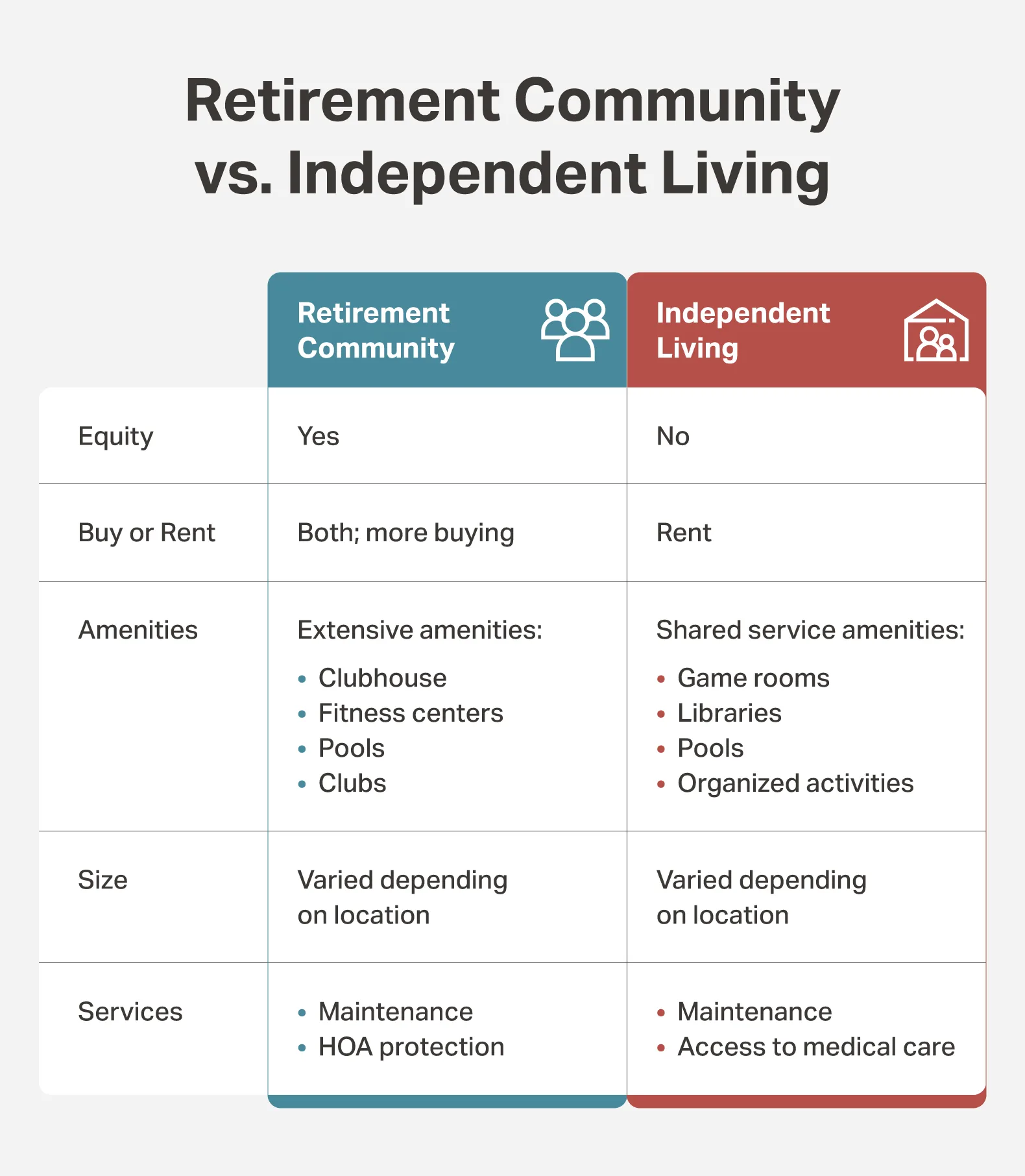
Active adult communities are generally age-restricted neighborhoods or apartment-style developments created for people who want an easier lifestyle and more community engagement. They often include fitness centers, walking paths, clubhouses, and organized activities. These features make them attractive to retirees who are still independent and do not require hands-on support.
By contrast, independent living is usually part of a larger senior living campus or rental community and may include optional meals, housekeeping, transportation, and social programming. While both models support independence, independent living communities may offer more services and a smoother transition if needs change.
Assisted living is designed for older adults who need help with some activities of daily living. Staff can assist with bathing, grooming, mobility support, medication management, and meals. For families noticing changes in routine, hygiene, or safety, assisted living may provide the right balance of support and autonomy.
Memory care is a specialized form of senior living for people with cognitive decline. It offers secure environments, structured routines, and trained staff who understand the behavioral and emotional needs of residents with dementia. This level of care is very different from an active adult community, which is not built to manage memory loss or wandering risk.
Skilled nursing provides the highest level of care in this comparison. It is appropriate for residents recovering from surgery, illness, or injury, as well as those with complex medical conditions that require licensed clinical oversight. If a loved one needs regular wound care, rehabilitation, or monitoring, skilled nursing may be essential.
Why Texas Is a Strong Market for Senior Housing
Texas continues to attract attention from developers, investors, and older adults because of its growth, climate, and large retiree population. Communities in Texas often emphasize outdoor living, wellness, and spacious amenities, which can appeal to active older adults looking for a retirement community lifestyle without heavy upkeep.
For families, the key is not just market growth but fit. A well-designed community may offer attractive surroundings, yet the right choice depends on whether the resident can safely manage daily life with minimal assistance. A beautiful setting does not replace the need for support if health or cognition begins to decline.
When comparing senior living choices, families should ask one simple question first: can my loved one safely and comfortably meet their daily needs now, and what support might they need in the next 12 to 24 months?
Questions to Ask Before Choosing a Community
1. What daily support is currently needed?
Start with an honest assessment of activities of daily living (ADLs). If your loved one can cook, bathe, dress, manage medications, and get around safely, an active adult community or independent living may be appropriate. If they need help with several of these tasks, assisted living should be considered.
2. How will care needs change over time?
Many families focus on the present, but aging often brings new challenges. Ask whether the community can support future transitions to assisted living, memory care, or skilled nursing if circumstances change. A plan for flexibility can reduce stress later.
3. What lifestyle features matter most?
Some residents care most about fitness, social events, and low-maintenance living. Others want dining options, transportation, wellness checks, or pet-friendly senior living policies. Amenities can improve happiness, but they should be viewed as part of the overall care picture rather than the only deciding factor.
4. What services are included and what costs extra?
Understand monthly fees, service packages, and any additional charges. Families should compare what is included in an active adult community versus an independent living or assisted living setting. Clear pricing helps avoid surprises and makes long-term planning easier.
How Families Can Evaluate the Best Fit
The best senior living choice is the one that matches a person’s current abilities, health status, and preferences. A healthy, social older adult may thrive in an active adult community, especially if they value privacy and independence. Someone who needs more hands-on support may be better served by assisted living or a continuing care model.
Families should also consider whether a loved one is showing warning signs such as missed medications, falls, weight loss, confusion, or difficulty maintaining the home. These signs can indicate that a less supportive setting may no longer be enough.
Visiting communities in person, speaking with staff, and asking about emergency response, transportation, dining, and wellness support can reveal whether a setting is truly a good match. If the older adult has memory concerns or significant medical needs, it is especially important to evaluate memory care or skilled nursing options early.
Making a Confident Decision
Choosing between active adult communities and other senior living options is not just about amenities. It is about safety, support, independence, and long-term peace of mind. Families who understand the differences between independent living, assisted living, memory care, skilled nursing, and respite care are better prepared to make a thoughtful decision.
Active adult communities can be an excellent option for older adults who want community and convenience without daily care services. But when health needs increase, a more supportive environment may be necessary. Reviewing the full range of senior housing choices helps ensure your loved one has the right level of support at the right time.
For caregivers and family decision-makers, the most responsible approach is to match today’s needs with tomorrow’s possibilities. That way, the chosen community can support not only a comfortable lifestyle, but also a safer and more secure aging journey.

Written by
Rachel Kim
Senior Research Lead at NearbySeniorLiving.com. Rachel brings over a decade of experience in senior care research, helping families navigate the complex landscape of care options with evidence-based guidance. Her work focuses on translating clinical research into practical advice for family caregivers.