
Alzheimer’s Care Decisions: How Families Can Choose the Right Next Step in Senior Living
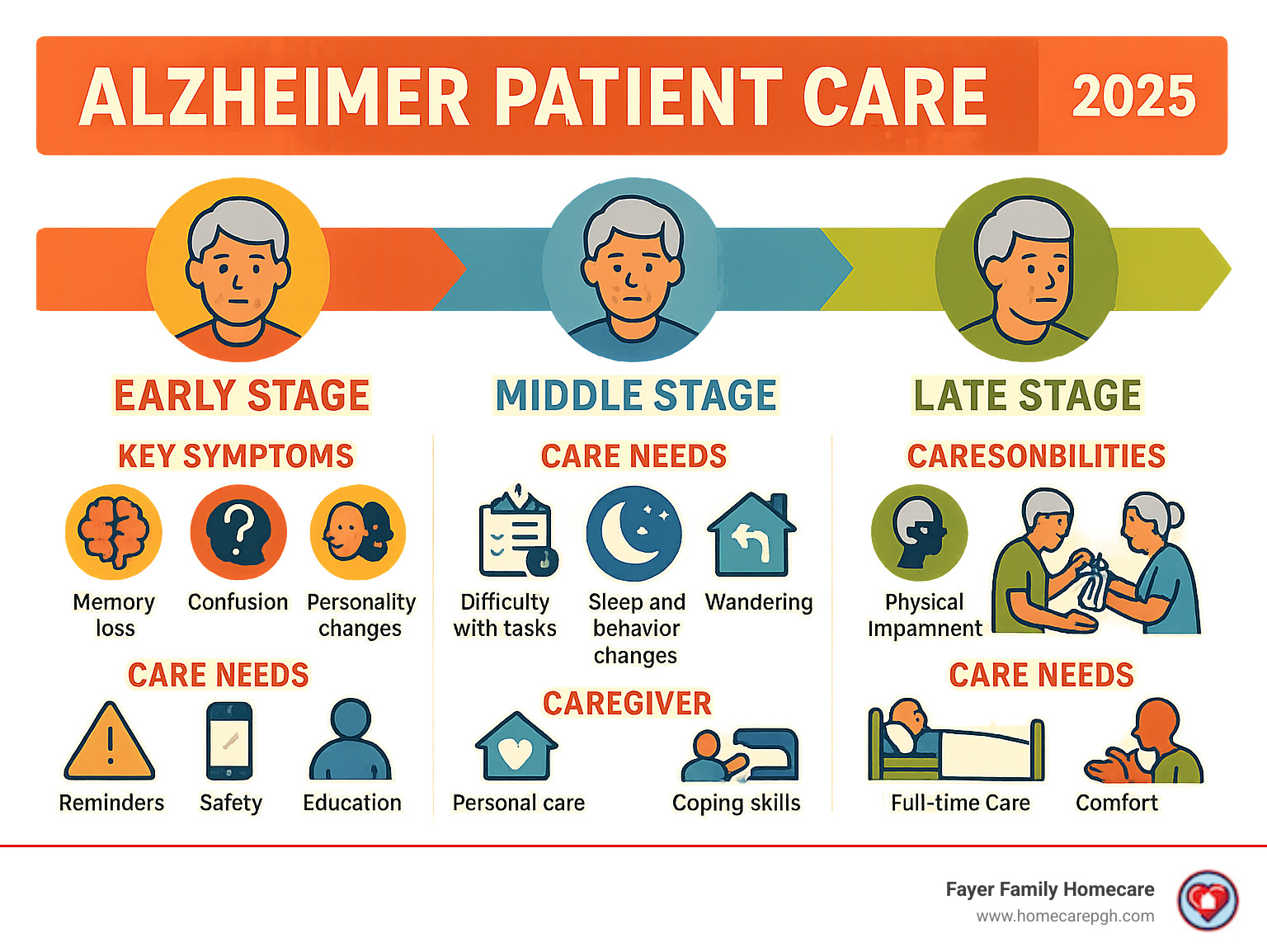
When a loved one with Alzheimer’s disease begins needing more help, choosing the right senior living option can feel urgent, emotional, and confusing. Families may be weighing safety risks, caregiver burnout, medication needs, wandering, nutrition, mobility, and changes in behavior all at once. The best next step is rarely based on a single symptom. It depends on the person’s stage of dementia, medical needs, ability to manage activities of daily living (ADLs), home safety, and the caregiver’s capacity to provide consistent support.
Alzheimer’s care decisions should be made with medical guidance, realistic planning, and a clear understanding of available care settings. From in-home support and respite care to assisted living, memory care, and skilled nursing, each option serves a different level of need. This guide helps family decision-makers evaluate what matters most before making a move.
Important Points for Families to Consider
- Safety and supervision are central. Wandering, falls, medication mistakes, and unsafe cooking may signal the need for more structured care.
- Care needs change over time. A person who thrives in independent living today may later need assisted living, memory care, or skilled nursing.
- Behavior changes are communication. Agitation, resistance to care, or sleep disruption may reflect pain, infection, overstimulation, or unmet needs.
- Caregiver health matters. Respite care and professional support can help prevent burnout and delay crisis-based decisions.
- The right environment can improve quality of life. Routine, familiar cues, meaningful activities, and trained dementia care staff can reduce distress.
Start With the Person’s Current Level of Need
Before comparing communities, families should document what their loved one can and cannot do safely. This includes memory, judgment, mobility, continence, eating, bathing, dressing, toileting, medication management, and nighttime behavior. These are often described as activities of daily living (ADLs) and instrumental activities such as managing finances, transportation, meals, and household tasks.
A primary care physician, neurologist, geriatrician, or dementia care specialist can help identify whether changes are due to Alzheimer’s progression or another treatable issue. Sudden confusion, worsening agitation, falls, or sleep changes may be linked to infection, medication side effects, dehydration, pain, or depression. For YMYL health decisions, medical evaluation should come before assuming that all changes are permanent dementia decline.
When Independent Living May Still Be Appropriate
Independent living is generally designed for older adults who do not need hands-on daily care but want maintenance-free housing, social activities, dining options, transportation, and a retirement community lifestyle. It may be appropriate for someone in the very early stage of Alzheimer’s who remains safe, manages medications reliably, does not wander, and has strong family oversight.
However, independent living is not dementia care. If your loved one forgets to eat, gets lost, leaves appliances on, misses medications, or becomes anxious without frequent reassurance, a higher level of support may be safer. Families should ask whether the community offers a continuum of care, including assisted living or memory care, if needs increase.
Assisted Living for Daily Support
Assisted living can be a good fit when an older adult needs help with ADLs but does not require 24-hour medical care. Services often include help with bathing, dressing, meals, medication reminders, housekeeping, transportation, and social programming. For seniors with mild to moderate cognitive impairment, assisted living may provide structure while preserving dignity and independence.
Not every assisted living community is equipped for Alzheimer’s care. Families should ask whether staff are trained in dementia communication, redirection, fall prevention, and behavior support. It is also important to understand what happens if wandering, aggression, incontinence, or complex medication needs develop. Some assisted living communities can support these needs, while others may recommend transition to memory care.
Memory Care for Alzheimer’s and Dementia
Memory care is a specialized senior living setting for people with Alzheimer’s disease or other forms of dementia. These communities typically offer secure layouts, consistent routines, dementia-trained staff, cue-based design, structured activities, and supervision for residents who may wander or need frequent prompting.
Memory care may be the right next step when safety risks become frequent, the person is distressed at home, family caregivers cannot provide constant supervision, or behaviors require specialized support. Quality memory care is not only about security. It should include personalized life histories, sensory-friendly spaces, meaningful engagement, family communication, and care plans that adapt as the disease progresses.
Family tip: During tours, observe how staff interact with residents. Calm redirection, eye-level communication, patience, and respect are strong signs of dementia-informed care.
When Skilled Nursing Is Needed
Skilled nursing is appropriate when an individual requires a higher level of medical oversight than assisted living or memory care can provide. This may include complex wound care, rehabilitation after hospitalization, feeding support, advanced mobility needs, frequent nursing assessments, or management of multiple serious medical conditions.
Some nursing homes have secured dementia units, while others provide short-term rehabilitation or long-term care. If your loved one has Alzheimer’s plus significant medical needs, ask about nurse staffing, physician access, therapy services, hospitalization rates, fall prevention, and experience with dementia-related behaviors. Families should also review state inspection reports and speak with care coordinators before making a placement decision.
Using Respite Care Before a Crisis
Respite care offers temporary support for families caring for someone with Alzheimer’s. It may be provided in the home, through adult day programs, or as a short-term stay in an assisted living or memory care community. Respite is especially valuable when caregivers are exhausted, traveling, recovering from illness, or considering whether a community is a good long-term fit.
Many families wait too long to use respite care because they feel guilty. In reality, respite can protect both the caregiver and the person receiving care. A rested caregiver is better able to make thoughtful decisions, respond calmly, and maintain a safer home environment.
Questions to Ask Before Choosing a Community
- What dementia training do staff receive, and how often is it updated?
- How are care plans created and reviewed?
- What is the staff-to-resident ratio during the day, evening, and overnight?
- How does the community respond to wandering, falls, refusal of care, or agitation?
- Are nurses available on-site or on-call?
- What services are included in the base price, and what costs extra?
- Can residents age in place if care needs increase?
- How are families updated about changes in health or behavior?
Families should also ask about dining support, medication administration, transportation to appointments, emergency response, and end-of-life care coordination. Transparent answers are a sign of trustworthy operations.
Do Lifestyle Features Still Matter?
Yes. Alzheimer’s care is clinical, but it is also deeply personal. The right environment should support identity, comfort, and connection. A quality retirement community or dementia care setting may offer music, art, gardening, movement classes, faith services, reminiscence activities, and small-group programs adapted to cognitive ability.
For some families, pet-friendly senior living is also important. Pets can provide comfort, routine, and emotional connection. Policies vary widely, especially in memory care, so ask about pet size limits, care responsibilities, vaccination requirements, fees, and what happens if the resident can no longer care for the pet independently.
How to Match Care Level to Common Alzheimer’s Changes
- Forgetting appointments or bills but still safe at home: Consider family oversight, in-home support, adult day programs, or independent living with strong monitoring.
- Needing help with bathing, dressing, meals, or medications: Assisted living may be appropriate if wandering and behavioral symptoms are manageable.
- Wandering, unsafe exits, frequent confusion, or caregiver exhaustion: Memory care may provide safer supervision and dementia-specific routines.
- Complex medical needs, severe mobility limitations, or post-hospital recovery: Skilled nursing may be necessary.
- Temporary caregiver relief or trial stay: Respite care can provide short-term support and planning time.
Practical Next Steps for Families
Begin by scheduling a medical review and writing down recent changes in memory, behavior, mobility, sleep, eating, and ADLs. Then compare care settings based on current needs and likely progression, not only on what feels comfortable today. Tour multiple communities, ask direct questions, review licensing and inspection information, and involve trusted healthcare professionals.
Alzheimer’s care decisions are rarely easy, but they can be made with clarity. The goal is not simply to choose a building. It is to choose a safe, compassionate support system where your loved one can receive appropriate care while your family gains guidance, relief, and peace of mind.

Written by
Rachel Kim
Senior Research Lead at NearbySeniorLiving.com. Rachel brings over a decade of experience in senior care research, helping families navigate the complex landscape of care options with evidence-based guidance. Her work focuses on translating clinical research into practical advice for family caregivers.