
Pet-Friendly Senior Living: How Pets Support Well-Being in Assisted Living and Memory Care
Pet-Friendly Senior Living: How Pets Support Well-Being in Assisted Living and Memory Care
For many families, choosing senior living is about more than safety, meals, and help with daily routines. It is also about quality of life. One of the most meaningful quality-of-life factors is whether a community welcomes pets. Pet-friendly senior living can help older adults feel more at home, ease loneliness, and support emotional wellness during a major life transition. As families compare assisted living, independent living, memory care, and even skilled nursing options, pet policies may play a bigger role than expected. A beloved dog or cat can bring structure, comfort, and purpose to daily life, especially when a move involves leaving a longtime home behind. Understanding how pet accommodations work can help families choose a community that supports both care needs and personal happiness.
What Families Should Know About Pet-Friendly Senior Living
Pet-friendly communities are designed to support older adults who want to remain with a companion animal while receiving the right level of care. For many residents, pets are not a luxury – they are part of daily emotional support and routine. In a well-run retirement community, pet policies may include breed or size guidelines, vaccination requirements, leash rules, and designated outdoor relief areas. Some communities welcome cats and dogs, while others may allow only certain types of pets.
When evaluating options, families should ask how pet care is handled during illness, travel, or a temporary increase in care needs. Some communities offer access to local pet services or help coordinate visits from family caregivers. Others may allow more flexible support in independent living than in higher-acuity settings like memory care or skilled nursing. Asking these questions early can prevent surprises later.
Why Pets Matter in Senior Care
Pets can provide steady companionship, which may be especially important when older adults are adjusting to new surroundings. Many residents experience reduced stress when their pet remains nearby. Daily walks, feeding routines, and grooming can also encourage movement and structure. These benefits can be meaningful for people who need assistance with activities of daily living (ADLs) but still want a sense of normalcy.
“A pet can do more than offer companionship – it can help preserve identity, routine, and a sense of purpose during a major life change.”
For adults living alone before the move, a pet may have served as a primary social connection. Keeping that bond intact can make the transition to assisted living feel less overwhelming. In some cases, pets may also support family members by easing guilt and helping loved ones feel more comfortable about the move.
How Pet-Friendly Policies Differ by Care Level
Independent Living
Independent living communities often provide the most flexibility for residents with pets. Because residents typically need little or no hands-on help with ADLs, there may be fewer restrictions on pet ownership. This can be a strong option for older adults who want a maintenance-free lifestyle without giving up a dog or cat.
Assisted Living
In assisted living, staff members help residents with bathing, dressing, medication management, and other ADLs. Pet policies still vary, but many communities allow pets if the resident can provide or arrange daily care. Families should confirm whether the resident can safely walk a dog, clean a litter box, and meet feeding needs. If not, they should ask what support is available.
Memory Care
Memory care communities focus on individuals living with dementia-related conditions. Because safety and routine are central, pet policies may be more limited. Some memory care settings allow resident pets under specific circumstances, while others may provide animal-assisted activities instead. Families should ask whether familiar animals, therapy visits, or sensory-based pet programs are part of the care model.
Skilled Nursing
In skilled nursing, medical oversight is higher and resident needs are often more complex. Pet ownership may be less common, but some facilities still support visiting pets or community animal programs. Even when personal pet ownership is not practical, animal interaction can still improve mood and reduce isolation.
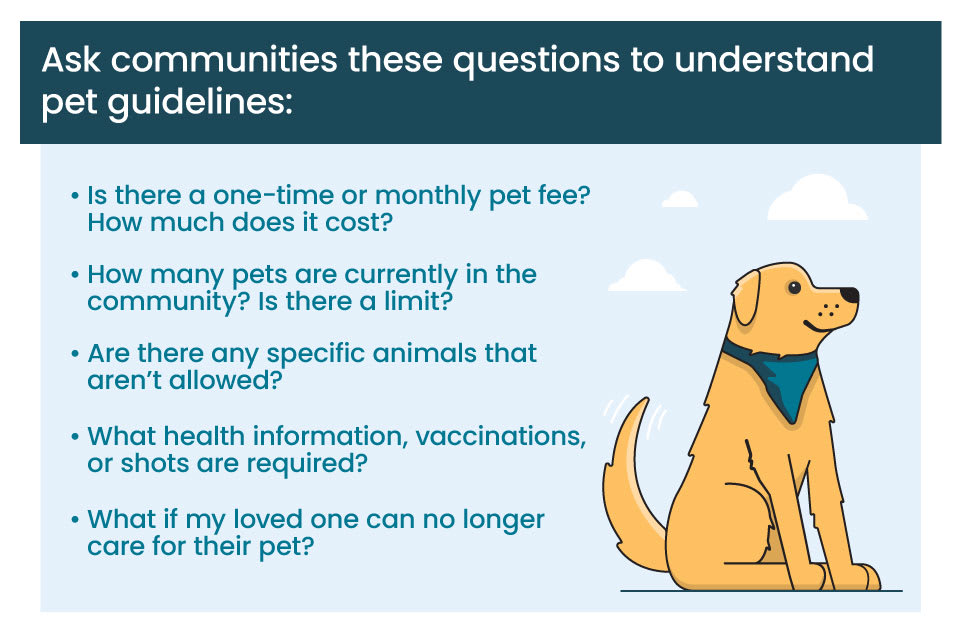
Questions to Ask Before Choosing a Community
Before moving forward, families should make sure the pet policy fits both the resident and the animal. A good fit means more than simply allowing pets – it means the environment supports safe, sustainable care.
- What types of pets are allowed? Ask about dogs, cats, birds, and other animals.
- Are there size, weight, or breed limits? Some retirement communities set clear restrictions.
- What proof is required? Communities may request vaccination records, licenses, or behavior documentation.
- Who is responsible for daily care? Confirm whether the resident must handle feeding, walks, and cleanup.
- Are there pet fees or deposits? Understand any monthly charges or one-time costs.
- What happens if care needs change? Ask how the community responds if the resident later needs more help with ADLs.
These questions are especially important for families comparing assisted living and memory care, where support levels can change over time. A community that welcomes pets today should also have a practical plan for tomorrow.
The Emotional Benefits of Pet Companionship
Research and caregiver experience alike suggest that pets can help older adults feel calmer, more engaged, and less isolated. For residents who may be grieving a spouse, a home, or a familiar neighborhood, a pet can be a steady source of affection. This is one reason pet-friendly senior living is often seen as more than a convenience – it can be part of a person-centered care approach.
Pets may also encourage social interaction. Neighbors often stop to chat during dog walks, and staff members may get to know residents through their animals. Those small daily moments can strengthen a sense of belonging inside the community.
How to Decide If Pet-Friendly Living Is Right for Your Loved One
The right choice depends on health, cognition, mobility, and the pet’s needs. A resident who is active and independent may do well in a pet-friendly retirement community. Someone needing help with multiple ADLs may still thrive in assisted living if family members or staff can help coordinate pet care. For a person with dementia, the decision may require a closer review of safety, stress triggers, and the animal’s ability to adapt.
Families should also consider the pet itself. Older pets may be calmer and easier to manage in senior living, while younger or high-energy animals may require more support than a resident can provide. If the animal is part of the resident’s emotional stability, preserving that bond can be valuable – but only if the setup is realistic and safe.
Signs of a Strong Pet-Friendly Community
Not every community that says it is pet-friendly offers the same level of support. Look for communities that clearly communicate policies, maintain clean outdoor areas, and show respect for both residents and animals. A strong community will also explain how pet ownership fits into care plans, especially when health needs increase.
- Clear pet policies with written guidelines
- Safe walking paths and designated pet areas
- Staff who understand the role of pets in emotional well-being
- Flexible support options if the resident needs more help
- Opportunities for animal visits or pet-based enrichment
These details can make a meaningful difference in daily life. They also signal that the community understands the whole person, not just the care checklist.
What This Means for Families Comparing Senior Living Options
Whether you are exploring independent living, assisted living, memory care, or skilled nursing, the best choice should balance medical support with personal comfort. For many older adults, a pet is a core part of that comfort. Choosing pet-friendly senior living can help preserve routine, reduce loneliness, and make a move feel less like a loss and more like a new beginning.
When touring communities, bring up pet questions early. Ask staff how they support residents with animals, how they handle changes in care needs, and what happens if a pet outlives the resident’s ability to care for it. These conversations can reveal whether a community truly understands resident-centered living.
For families, the goal is not just finding a place to live. It is finding a place where a loved one can feel safe, supported, and at home – with the companionship that matters most.

Written by
Rachel Kim
Senior Research Lead at NearbySeniorLiving.com. Rachel brings over a decade of experience in senior care research, helping families navigate the complex landscape of care options with evidence-based guidance. Her work focuses on translating clinical research into practical advice for family caregivers.