
How Mobility Aids Support Senior Living, Reduce Caregiver Strain, and Improve Daily Independence
Why Mobility Aids Matter for Aging Adults and Their Families
Mobility aids can make a meaningful difference in senior living by helping older adults move more safely, stay independent longer, and reduce the daily strain on family caregivers. For many families, the need for a walker, cane, wheelchair, transfer aid, or other support device is often one of the first signs that a loved one may need more help with activities of daily living (ADLs). In the right setting, mobility support can improve comfort, preserve dignity, and lower the risk of falls or overexertion.
Whether your loved one is living at home, considering assisted living, or evaluating a retirement community, understanding how mobility aids fit into a broader care plan can help you make a more informed decision. They are not just medical tools – they can also influence social engagement, emotional well-being, and the amount of hands-on support a person needs from family members or professional caregivers.
What Families Should Know About Mobility Support
- Mobility aids can reduce fall risk and help older adults navigate daily routines with more confidence.
- The right device depends on balance, strength, cognition, and the level of assistance needed with ADLs.
- Care settings such as assisted living, memory care, and skilled nursing may offer different levels of mobility assistance.
- Caregiver burden often decreases when seniors use the proper equipment and receive training on safe use.
- Personal preferences, including pet-friendly senior living and access to activities, also matter when selecting a community.
How Mobility Aids Help in Daily Life
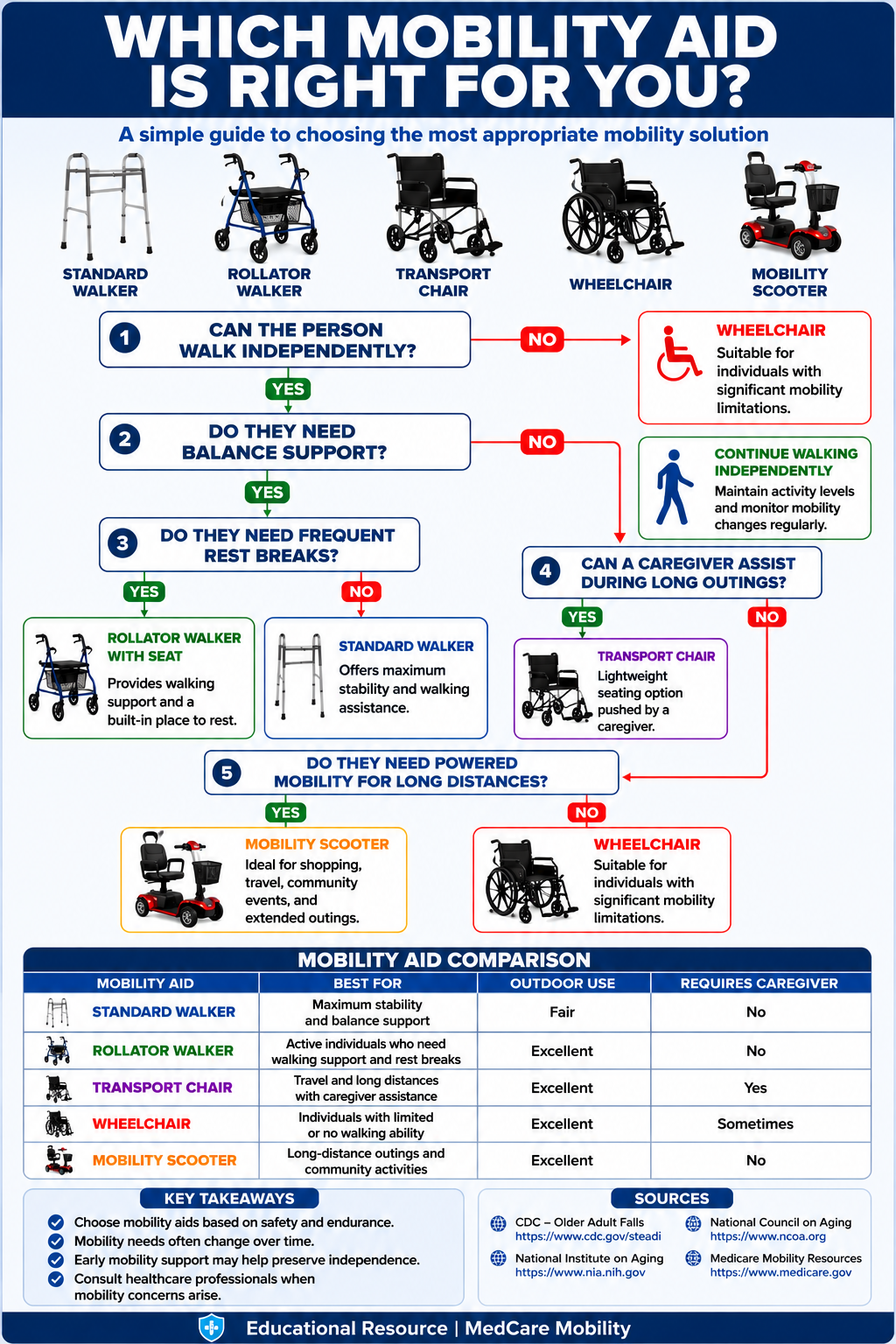
Mobility aids are designed to support movement, but their benefits go far beyond transportation from one room to another. A well-fitted cane or walker can help an older adult conserve energy while walking to meals, using the restroom, or participating in social activities. Wheelchairs and transport chairs may be appropriate when endurance is limited or when a person needs support for longer distances.
For seniors who need help with transfers, standing, or repositioning, additional assistive devices can reduce the risk of injury for both the older adult and the caregiver. This matters in every setting, from private homes to independent living communities where residents may still manage most tasks on their own, but need occasional support.
When mobility is supported early and appropriately, older adults are often able to remain more engaged, more active, and more confident in their own routines.
Reducing the Burden on Family Caregivers
Many caregivers provide daily assistance with bathing, dressing, toileting, meal support, and transportation. These responsibilities become more demanding when a senior struggles with balance, fatigue, or weakness. Mobility aids can ease some of this pressure by making routine tasks safer and less physically taxing.
For example, a transfer belt may help a caregiver assist with standing from a chair. A shower chair may reduce the risk of slipping during personal care. A rollator may allow a loved one to walk short distances with fewer rest breaks, making it easier to join family meals or community activities. Over time, these supports can lower stress and help caregivers avoid burnout.
In some cases, families may also need respite care. Temporary support in a senior living community or care center can give caregivers time to rest while ensuring that the older adult continues to receive help with mobility and ADLs.
Choosing the Right Level of Care
Independent Living
Independent living can be a strong option for older adults who are largely self-sufficient but want a maintenance-free lifestyle and access to social opportunities. Residents who use mobility aids may still do well in this environment if they do not require hands-on daily help.
Assisted Living
Assisted living is often a good fit when a senior needs regular help with ADLs such as bathing, dressing, or moving safely around the apartment. Many communities are designed with accessibility features, staff support, and mobility-friendly layouts that can make daily life easier.
Memory Care
Memory care communities support people living with Alzheimer’s disease or other forms of dementia. Mobility aids in these settings must be chosen carefully, since memory loss can increase the risk of improper use. Staff training, secure environments, and consistent routines are especially important.
Skilled Nursing
Skilled nursing may be appropriate when a person needs round-the-clock clinical oversight, rehabilitation, or complex mobility assistance after illness, surgery, or decline. In this setting, physical therapists, nurses, and aides can coordinate on safe transfers and strengthening plans.
Important Factors to Consider Before Selecting a Mobility Aid
Not every device is right for every senior. Families should look at mobility from a holistic perspective that includes strength, endurance, cognition, vision, home layout, and caregiver availability. A device that seems helpful in theory may not be practical if it is too heavy, difficult to maneuver, or unsafe for the senior to use alone.
A licensed clinician such as a physician, physical therapist, or occupational therapist can help determine the best option. Proper fit and training are essential. A walker that is too tall or too short can create new risks instead of solving old ones.
- Balance and fall history: Frequent stumbles or near-falls may indicate a need for more supportive equipment.
- Upper body strength: Some aids require more arm strength and coordination than others.
- Cognitive changes: Seniors with dementia may need simpler, safer solutions.
- Living environment: Door widths, flooring, and bathroom setup can affect which aid works best.
- Social and lifestyle needs: A device should still allow participation in meals, hobbies, and community events.
Mobility Aids and Quality of Life
Good mobility support can preserve more than physical function. It can protect confidence, independence, and social connection. When seniors can move more safely, they are often more willing to leave their rooms, attend programming, and maintain relationships. That is especially important in a retirement community where daily engagement is a major part of healthy aging.
For pet-friendly senior living communities, mobility support can also make it easier for residents to care for small pets, walk in outdoor areas, or participate in neighborhood routines without feeling overwhelmed. The right environment combines safety with dignity, helping residents remain active in ways that reflect their personal interests and needs.
When to Ask for Professional Help
If a loved one has had repeated falls, shows increased fear of walking, or needs help standing, it is time to speak with a professional. Sudden changes in gait, posture, or stamina should never be ignored. An occupational therapist or physical therapist can evaluate function and recommend practical tools, while senior living advisors can help families compare communities that match the person’s care needs.
Professional guidance is especially important if your loved one has dementia, recent surgery, stroke recovery needs, or advanced frailty. In these situations, safety planning should include not just the device itself, but also staff support, emergency procedures, and the ability to respond quickly when help is needed.
The best mobility solution is one that fits the person, the environment, and the level of support available each day.
Planning Ahead With Confidence
Families often wait until a fall or hospitalization before addressing mobility concerns, but earlier planning can lead to better outcomes. Reviewing care needs before a crisis gives you more options, whether that means adding support at home, exploring assisted living, or moving to skilled nursing after a decline in health.
Mobility aids are one part of a larger care strategy. Combined with proper assessment, staff training, and the right senior living environment, they can help older adults remain safer, more comfortable, and more independent. For caregivers, that often means less physical strain, less worry, and more time to focus on meaningful connection instead of constant lifting and support.
If you are comparing care options, look for communities that understand mobility support as part of everyday life. The best fit will respect the senior’s dignity, encourage participation, and provide the level of assistance needed to stay secure and engaged.

Written by
Rachel Kim
Senior Research Lead at NearbySeniorLiving.com. Rachel brings over a decade of experience in senior care research, helping families navigate the complex landscape of care options with evidence-based guidance. Her work focuses on translating clinical research into practical advice for family caregivers.