
How to Choose Memory Care in Austin: A Family Guide to Safe, Supportive Senior Living
Choosing memory care with confidence
Finding the right memory care community is one of the most important decisions families make for an aging loved one. When dementia, Alzheimer’s disease, or other cognitive changes begin to affect safety, routines, and quality of life, families often need a setting that offers more than basic support. They need a place designed for structure, dignity, and compassionate daily care within the broader world of senior living. In Austin, families comparing options may see many models, from assisted living communities with specialized memory support to stand-alone neighborhoods focused entirely on cognitive care. The best choice depends on health needs, personality, daily habits, and long-term planning. This guide breaks down what to look for, how to compare care levels, and which questions can help you make a thoughtful, informed decision for your loved one.
What to know before touring communities
Memory care is designed for people who need a safe, structured environment and help with activities of daily living (ADLs) such as bathing, dressing, grooming, eating, and medication reminders. It also typically includes enhanced security, consistent routines, and staff trained to support residents living with dementia-related behaviors. Families often compare memory care with assisted living, independent living, skilled nursing, and respite care to determine which level of support fits best.
A strong community should offer more than supervision. It should help residents remain engaged, reduce confusion, and preserve as much independence as possible in a safe setting. That balance is what makes the right environment feel like a true home.
Choosing care is not only about medical needs – it is also about finding a place where your loved one can feel known, respected, and supported each day.
Signs memory care may be the right fit
Families often begin the search after noticing changes that make daily life harder or less safe. Common signs include repeated wandering, missed medications, poor hygiene, increased falls, difficulty recognizing familiar people, or trouble managing meals and routines. If these challenges are becoming frequent, a specialized memory care setting may offer the right level of support.
Some families start with assisted living and later transition to memory care as needs change. Others may need a higher level of care sooner, especially if behavioral symptoms, nighttime confusion, or safety concerns are significant. In more advanced health situations, a skilled nursing community may be appropriate if medical needs exceed what a residential setting can provide.
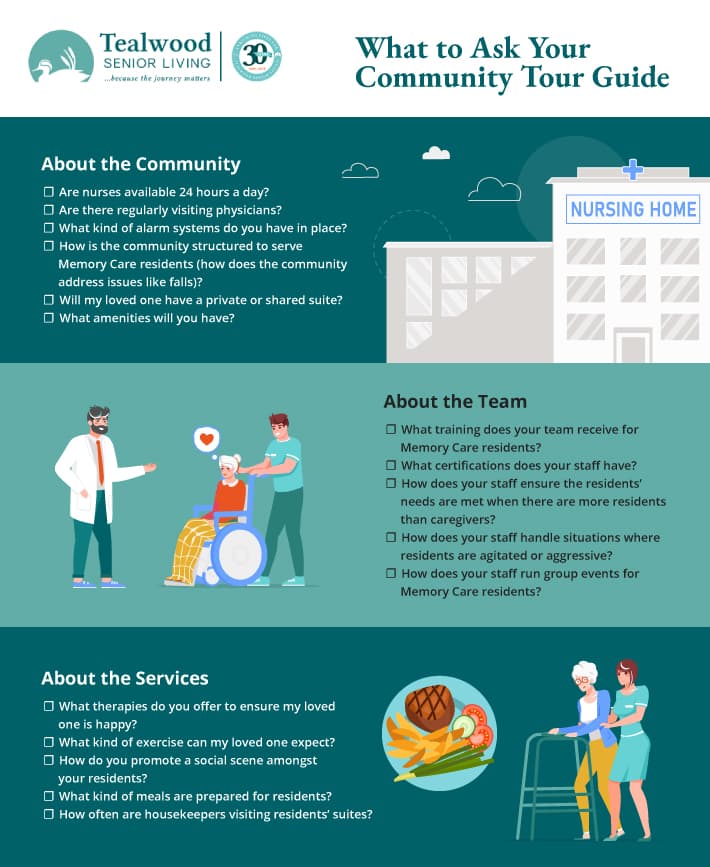
Questions to ask during a tour
- How is the community secured for residents who may wander?
- What dementia training do staff members receive?
- How do you support residents with bathing, dressing, and meals?
- What does a typical day look like for someone in memory care?
- How are emergencies, falls, and behavior changes handled?
- What services are included in the monthly rate?
- Can the community adjust care if needs increase?
What to look for in a high-quality memory care community
The best memory care communities combine safety, structure, and meaningful daily engagement. Look for clear wayfinding, calm common areas, secure outdoor spaces, and a layout that reduces confusion. Resident rooms should feel comfortable and easy to personalize. Just as important, staff should speak with patience and respect, using communication techniques that support memory loss without creating embarrassment or frustration.
Families should also look closely at staff availability. A good community has caregivers present throughout the day and night, with supervisors who can respond quickly to changing needs. Ask how staffing levels compare during meals, evenings, and weekends, when residents often need the most support.
Daily life should feel purposeful
Quality memory care is not only about supervision. It should include activities that are adapted to residents’ abilities and interests. This may include music, gentle exercise, art, gardening, sensory programs, or simple social gatherings. Purposeful activities can reduce anxiety, encourage connection, and improve overall well-being.
Families comparing retirement community options may notice that memory care sections are often designed differently from independent living neighborhoods. Independent living supports active older adults who do not need regular personal care, while memory care provides much more hands-on support. Understanding that difference can help families avoid choosing a setting that is too independent for a loved one’s current needs.
How memory care compares with other senior living options
Because every older adult has unique needs, it helps to understand the major senior living categories side by side.
- Independent living – Best for active seniors who want fewer household responsibilities and do not need daily personal care.
- Assisted living – Helps with meals, housekeeping, medication reminders, and some ADLs, while supporting as much independence as possible.
- Memory care – Adds specialized dementia support, enhanced security, and structured routines for cognitive decline.
- Skilled nursing – Provides 24-hour medical oversight and rehabilitation services for people with complex health needs.
- Respite care – Offers short-term stays that can help families during travel, recovery, or caregiver burnout.
Many families use respite care as a bridge before making a permanent move. A short stay can help your loved one experience the environment, routines, and staff before deciding on a longer-term plan.
What families should evaluate beyond the brochure
Marketing materials can be helpful, but they do not always show the full picture. During a visit, observe how staff greet residents, whether residents seem calm or frustrated, and whether the environment feels clean, organized, and welcoming. Notice mealtime support, activity participation, and how quickly staff respond to questions.
It is also wise to review policies related to medication management, fall prevention, emergency planning, and family communication. Ask how the community shares updates when a resident’s health or behavior changes. Reliable communication is a major part of trust.
Special considerations for Austin families
Austin families exploring memory care may have several neighborhood and lifestyle preferences to balance, including access to physicians, proximity to adult children, and community culture. Some families also want pet-friendly senior living because a familiar pet can provide comfort and routine. If a loved one thrives around animals, ask whether the community allows pets or offers pet visits as part of resident enrichment.
Location matters, but so does fit. A community that is close to home is valuable, yet the most important factor is whether it can support current and future needs safely and respectfully.
How to compare costs and value
Memory care typically costs more than independent living or standard assisted living because of the higher staffing needs, security measures, and specialized programming. When comparing communities, ask what is included in the base rate and what may cost extra. Common additional charges can involve medication management, transportation, incontinence support, personal care, or enhanced companion services.
Rather than focusing only on price, evaluate value in terms of safety, staffing consistency, engagement, and peace of mind. A slightly higher monthly rate may be worthwhile if the community offers stronger dementia training, better communication, and a more stable environment.
The right fit is the one that supports both present needs and future changes without sacrificing dignity, safety, or family confidence.
Helping your loved one transition more smoothly
Moving into memory care can be emotional for both residents and families. A smoother transition often starts with simple steps: bring familiar photos and blankets, keep routines as consistent as possible, and share life history with staff so they can personalize care. Short visits may help some residents adjust, while others do better with a clear, direct move.
Families should stay involved after move-in by attending care meetings, joining events, and checking in regularly. That ongoing connection helps the community build trust and tailor support as needs evolve.
Final thoughts for families making the decision
Choosing the right memory care community is about more than finding a safe place. It is about selecting a setting where your loved one can receive respectful support, meaningful daily engagement, and care that evolves with changing needs. By comparing senior living options carefully, asking detailed questions, and observing the community in person, families can make a decision with greater confidence. Whether the best fit is assisted living, memory care, skilled nursing, independent living, or respite care, the goal remains the same – protecting quality of life while supporting the person behind the diagnosis.

Written by
Rachel Kim
Senior Research Lead at NearbySeniorLiving.com. Rachel brings over a decade of experience in senior care research, helping families navigate the complex landscape of care options with evidence-based guidance. Her work focuses on translating clinical research into practical advice for family caregivers.