
How to Evaluate Senior Living Options for a Loved One: Assisted Living, Memory Care, and More
What Families Should Know Before Choosing Senior Living
Choosing senior living for a parent or spouse is rarely a single-decision process. Families often begin by comparing daily support needs, safety concerns, social opportunities, and the level of medical care a loved one may require now and in the future. The right setting can support independence while easing the burden on family caregivers, but the wrong fit can lead to stress, isolation, or unmet health needs.
As you compare communities, it helps to look beyond brochures and tour scripts. Ask how staff help residents with activities of daily living (ADLs), what health services are available, how memory support is handled, and whether the community can adapt as care needs change. A thoughtful review of assisted living, independent living, memory care, skilled nursing, and respite care can make the decision clearer and more confident for the whole family.
What Matters Most When Comparing Care Options
- Level of daily support: Match the community’s services to current ADL needs such as bathing, dressing, meals, mobility, and medication reminders.
- Safety and supervision: Look at fall prevention, emergency response systems, secure access, and staff availability day and night.
- Health and memory support: Consider whether the community can provide cognitive support, care coordination, or access to skilled nursing if health needs increase.
- Quality of life: Review social activities, dining, transportation, and whether the setting feels like a true retirement community rather than only a place for care.
- Personal preferences: Confirm whether the community offers features such as pet-friendly senior living and resident-centered amenities that support comfort and routine.
Understanding the Main Senior Living Types
Independent Living
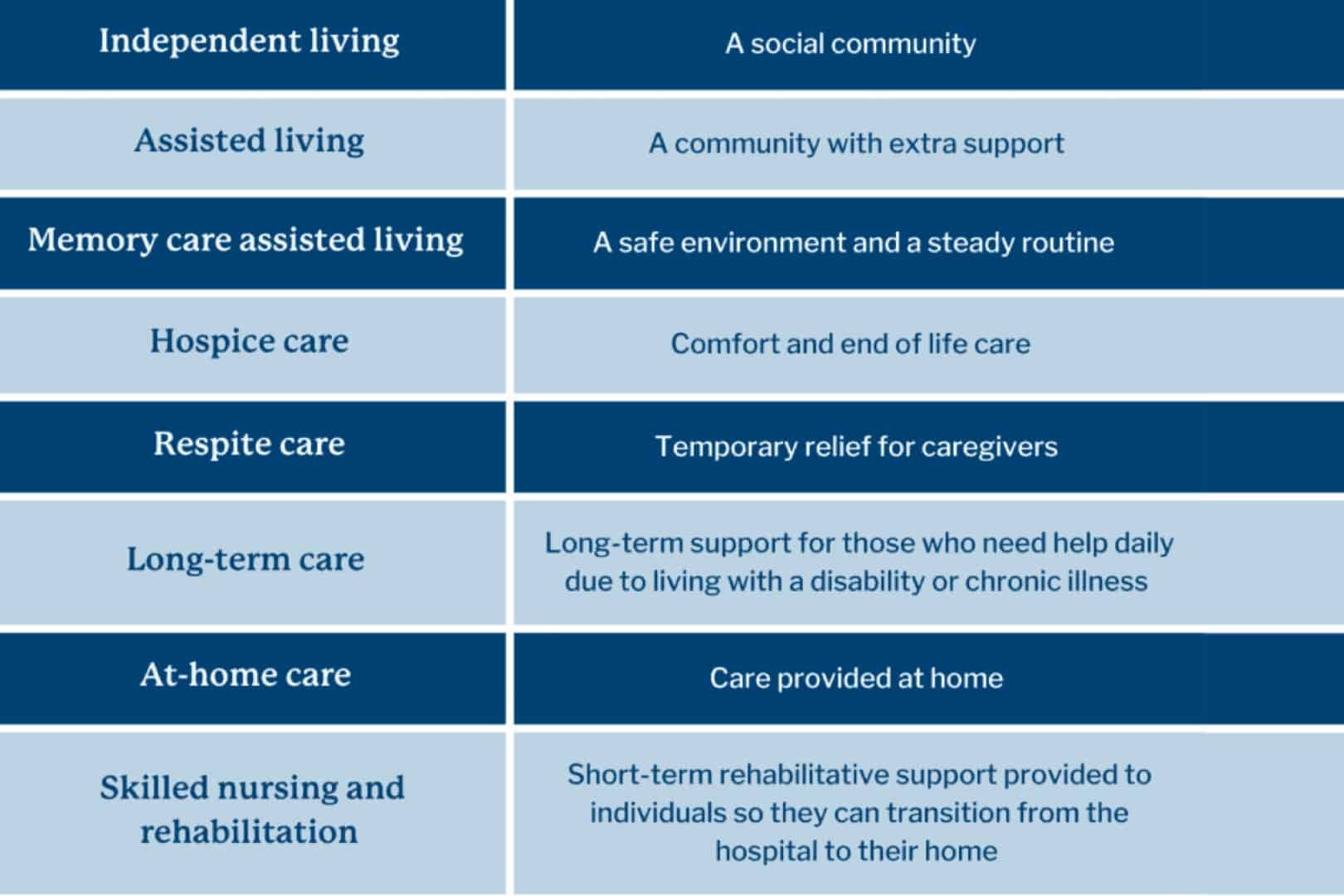
Independent living is designed for older adults who can manage most daily tasks on their own but want a simpler lifestyle with fewer home responsibilities. These communities often provide meals, housekeeping, transportation, and social programming. They are a strong option for active older adults who want convenience and connection while preserving independence.
Assisted Living
Assisted living is appropriate for seniors who need regular help with ADLs but do not require intensive medical care. Residents usually receive support with bathing, dressing, grooming, meals, medication reminders, and mobility. For families, assisted living can offer a balance of independence and assistance, especially when a loved one is no longer safe living alone.
Memory Care
Memory care provides specialized support for people living with Alzheimer’s disease or other forms of dementia. These programs typically include structured routines, secured environments, trained staff, and activities that reduce confusion and support engagement. If your loved one has wandering risk, difficulty managing medications, or increasing disorientation, memory care may be more appropriate than standard assisted living.
Skilled Nursing
Skilled nursing is a higher level of care for individuals who need ongoing nursing supervision, rehabilitation, wound care, complex medication management, or assistance after a hospitalization. It is often the right choice when medical needs exceed what assisted living can safely provide. Some communities offer both short-term rehabilitation and long-term skilled care.
Respite Care
Respite care gives family caregivers temporary relief while a senior stays in a safe, supportive setting. It can be used after a caregiver vacation, during recovery from illness, or as a trial stay before a longer move. Respite stays are also helpful for families who want to test whether a community is a good fit before making a permanent decision.
How to Match Care Level to Daily Needs
One of the most important steps in selecting a community is evaluating how much help a loved one needs with activities of daily living (ADLs). These include bathing, continence, toileting, eating, transferring, and dressing. If a senior can manage most of these tasks independently, independent living or a lighter-support retirement community may be enough. If help is needed every day, assisted living is often a better match.
Families should also consider changes that may happen over time. A person who seems stable today may need more support after a fall, illness, or cognitive decline. Ask communities whether they can accommodate changing needs, provide care assessments, and coordinate with outside health professionals. A good plan should support both current safety and future flexibility.
Questions to Ask During a Tour
A tour is your chance to verify the details that matter most. Use the visit to observe interactions, ask direct questions, and compare how each community responds.
- How do you assess a new resident’s needs before move-in?
- What help do you provide with ADLs and medication management?
- How many caregivers are on site during the day and overnight?
- What happens if a resident’s condition changes and they need more support?
- Do you offer memory care services or transfer options if dementia progresses?
- Is short-term respite care available?
- What social, fitness, and enrichment activities are offered weekly?
- Are apartments or rooms available for pet-friendly senior living?
- How are emergencies handled, and how quickly does staff respond?
Signs a Community May Be a Good Fit
Beyond amenities, the best senior housing option should feel safe, welcoming, and realistic for your loved one’s lifestyle. Strong communities tend to have transparent pricing, clearly explained services, engaged staff, and residents who appear comfortable and active. Watch whether caregivers speak respectfully to residents, whether the environment is clean and well maintained, and whether the daily rhythm seems structured without feeling rigid.
Trustworthy senior care decisions are built on a clear match between a person’s current needs, anticipated changes, and the level of support a community can reliably provide.
It is also wise to consider proximity to family, physicians, hospitals, and familiar community connections. For many older adults, access to social relationships and meaningful routines is just as important as clinical support. The best senior living choice should protect safety without sacrificing dignity or independence.
Why Lifestyle and Environment Matter
Quality of life is a major part of long-term well-being. Many families focus first on care level, but the environment can influence adjustment, mood, and participation. Look for communities that offer recreation, outings, exercise classes, spiritual programming, and opportunities to connect with peers. A vibrant retirement community can help reduce loneliness and give older adults more structure and purpose.
For pet owners, pet-friendly senior living can be an important factor in comfort and emotional health. If a pet brings companionship and routine, ask about pet policies, fees, and any restrictions. In many cases, keeping a beloved animal nearby can make the transition easier.
When to Consider Memory Care or Skilled Nursing
Some families start with assisted living but later discover that more specialized support is needed. Memory care may be appropriate when a senior becomes unsafe due to wandering, agitation, severe forgetfulness, or difficulty recognizing familiar people and places. Skilled nursing should be considered when health conditions require frequent monitoring, rehabilitation, or complex clinical oversight.
Choosing the right level of care early can prevent repeated moves and reduce stress. If you are unsure, request a formal assessment from the community and discuss the findings with the family doctor or care manager. Objective input can help align care needs with the safest setting.
Making the Final Decision with Confidence
The best choice is usually the one that balances safety, support, affordability, and day-to-day happiness. Compare several communities, review contracts carefully, and ask about rates, services, and what may increase costs over time. Involve your loved one as much as possible so the transition feels respectful and collaborative.
When families take time to evaluate each option thoughtfully, they are more likely to find a community that supports wellness now and adapts as needs change. Whether the right fit is independent living, assisted living, memory care, skilled nursing, or respite care, the goal is the same – a safer, more connected, and more dignified life for the older adult you love.

Written by
Rachel Kim
Senior Research Lead at NearbySeniorLiving.com. Rachel brings over a decade of experience in senior care research, helping families navigate the complex landscape of care options with evidence-based guidance. Her work focuses on translating clinical research into practical advice for family caregivers.