
What Families Should Know About Continuing Care Retirement Communities and Senior Living Options
What to Know Before Choosing a Continuing Care Retirement Community
Choosing senior living for a loved one is rarely a single decision – it is a process of balancing current needs, future care expectations, lifestyle preferences, and budget. For many families, a continuing care retirement community can feel appealing because it brings several levels of support together in one place, including independent living, assisted living, memory care, and skilled nursing. That continuity can reduce stress later, especially when health needs change over time. But not every community is the right fit for every older adult. Before signing a contract, families should understand how care levels work, what is included, how pricing changes, and whether the community can truly support aging in place with dignity and flexibility.
Why Families Consider a Retirement Community
A retirement community can simplify the transition from fully independent living to more supportive care. Instead of moving multiple times as needs increase, residents may be able to stay within one campus and shift services when appropriate. This can be especially valuable for spouses with different health needs, or for older adults who want to preserve routines and social connections.
Many communities also emphasize wellness, social engagement, and convenience. Access to dining, transportation, fitness programs, and coordinated care can make daily life easier for residents and give families more peace of mind. For adult children helping a parent compare options, that combination of lifestyle and care can be a major advantage.
Levels of Care Families Should Compare
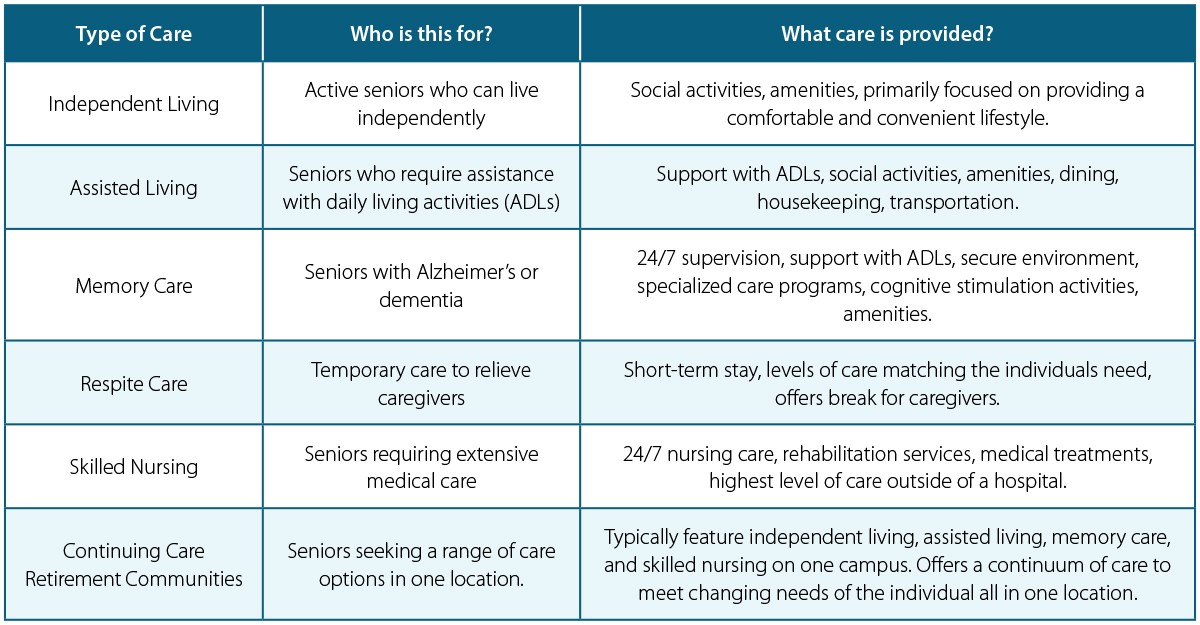
Understanding the differences between care levels is essential. A community may offer several of these services, but the scope and quality can vary widely.
Independent Living
Independent living is best for older adults who want a maintenance-free lifestyle but do not need daily personal care. Residents typically live in private apartments or homes and may have access to meals, housekeeping, transportation, and activities.
Assisted Living
Assisted living supports residents who need help with activities of daily living (ADLs), such as bathing, dressing, grooming, medication reminders, or mobility support. It is often a strong choice for seniors who still want independence but benefit from regular assistance.
Memory Care
Memory care provides structured support for people living with Alzheimer’s disease or other forms of dementia. These programs often include secured environments, staff trained in cognitive support, and activities designed to reduce confusion and promote engagement.
Skilled Nursing
Skilled nursing is designed for residents who need around-the-clock medical supervision or rehabilitation services. It can be important after hospitalization, during recovery, or when chronic medical conditions require a higher level of care.
Respite Care
Respite care offers short-term support for seniors and caregivers. It can help families during travel, caregiver burnout, or post-hospital recovery. For many people, it is also a practical way to test whether a community feels like a good long-term fit.
Important Questions About Costs and Contracts
One of the biggest decisions families face is understanding how a continuing care model is priced. Some communities charge an entrance fee plus monthly fees, while others use rental-style pricing. The contract structure can affect long-term affordability, future refunds, and which services are included.
Before committing, ask:
- What services are included in the monthly fee?
- How much do care levels increase if a resident moves from independent living to assisted living or memory care?
- Is there a refundable entrance fee?
- Are meals, medication support, transportation, and housekeeping included?
- What happens if the resident’s finances change over time?
Families should also ask whether the community offers fee transparency and written explanations of contract terms. A reputable provider should be willing to explain costs clearly and in plain language.
How to Evaluate Quality of Care
High-quality senior living is about more than attractive buildings and social calendars. Families should look for evidence of strong staffing, responsive communication, and consistent care practices.
Tip: The best communities can explain exactly how they support health changes, coordinate care, and respond when a resident’s needs increase.
During a tour, pay attention to staff interactions, cleanliness, dining quality, and whether residents appear engaged. Ask how care plans are created and updated, how often residents are reassessed, and whether nurses or licensed professionals are available on site.
If possible, speak with current residents and families. Their experience can reveal whether the community delivers on its promises and whether staff are attentive after move-in, not just during the sales process.
Signs the Community Fits a Loved One’s Needs
The right senior living setting should support both current and future needs. Families often find success when a community aligns with the older adult’s health, personality, and lifestyle preferences.
- The resident can receive help with ADLs without sacrificing dignity or independence.
- There is a clear pathway from independent living to assisted living or memory care if needed.
- Staff can describe emergency procedures, care reassessments, and communication practices.
- Residents have access to meaningful activities, friendships, and daily routines.
- The environment supports personal preferences, including pet-friendly senior living when companionship matters.
The Role of Activities and Daily Engagement
Well-designed activities are a major part of successful aging. In a strong retirement community, programming should be more than entertainment. It should promote cognitive stimulation, physical movement, social connection, and purpose.
Look for exercise classes, art programs, religious services, outings, educational lectures, music, and intergenerational events. For residents in memory care, meaningful routines and familiar activities can help reduce agitation and support quality of life. In assisted living, good engagement can also reduce isolation, which is often overlooked but can have a real impact on health.
When a Single Community May Not Be the Best Fit
Not every older adult needs or wants a full continuing care model. Some seniors are best served by independent living with occasional help at home. Others may need a specialized memory care community or skilled nursing setting from the start.
A family should reconsider the fit if the community cannot support current care needs, if costs are too high for long-term sustainability, or if the resident would lose important independence without gaining meaningful support. The right choice is not always the most comprehensive one – it is the one that most closely matches the person’s goals, health status, and finances.
How Families Can Move Forward with Confidence
Choosing care for an older adult can feel overwhelming, but a structured approach makes the process easier. Start by identifying the level of help needed today, then consider how those needs may change over the next few years. Visit multiple communities, compare services, and review contracts carefully. Involve the older adult in the conversation whenever possible so the final decision reflects their preferences and sense of home.
For many families, a continuing care retirement community offers an appealing blend of stability, flexibility, and social connection. When selected carefully, it can provide a supportive path through several stages of aging while easing the burden on loved ones.
As you compare senior living options, focus on transparency, staffing, lifestyle, and the ability to adapt over time. Those factors often matter just as much as location or amenities, and they can make all the difference in long-term comfort and peace of mind.

Written by
Rachel Kim
Senior Research Lead at NearbySeniorLiving.com. Rachel brings over a decade of experience in senior care research, helping families navigate the complex landscape of care options with evidence-based guidance. Her work focuses on translating clinical research into practical advice for family caregivers.