
How to Choose the Right Senior Living Option for a Loved One: A Family Decision Guide
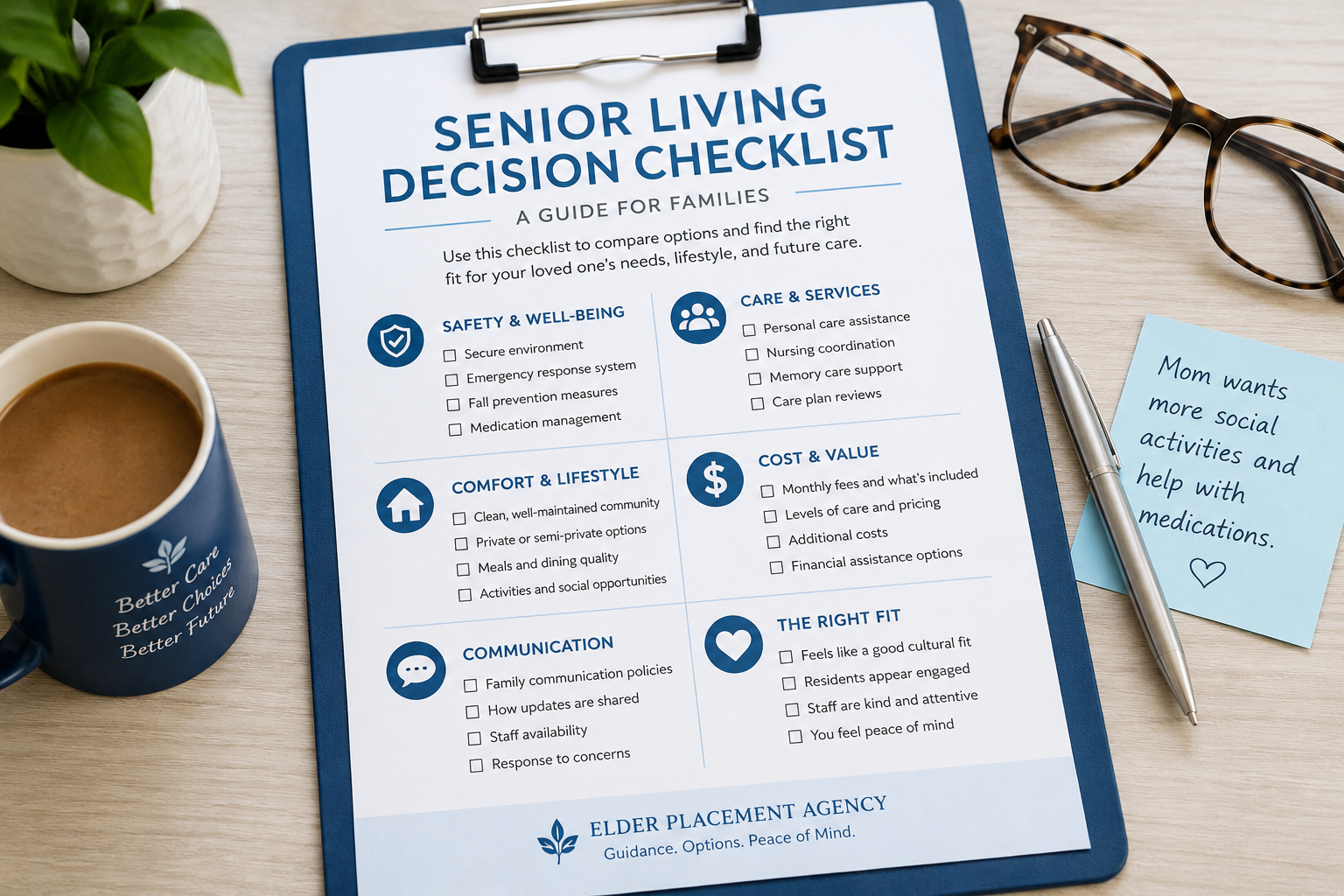
Making the Right Senior Living Choice Starts With the Right Questions
Choosing senior living for a parent or spouse is rarely simple. Families often begin the search feeling overwhelmed by medical needs, safety concerns, emotional stress, and financial questions. The good news is that the best decision usually becomes clearer when you match your loved one’s current abilities, health needs, and personal preferences to the right level of support. Whether you are comparing assisted living, memory care, skilled nursing, independent living, or respite care, the goal is the same – finding a setting that preserves dignity, comfort, and quality of life. A well-chosen retirement community can also support social connection, daily structure, and long-term peace of mind for the entire family.
What Families Should Focus On First
The most successful searches start with a realistic assessment of daily needs. Can your loved one manage medications safely? Are bathing, dressing, and meal preparation becoming difficult? Has memory loss affected judgment or wandering risk? These questions help determine whether a person can remain in independent living or needs more hands-on support in a higher-care environment. Families should also think about future needs, not just current ones. A community that can adapt as care changes may reduce the stress of another move later.
When evaluating senior care, the best fit is not always the most luxurious community – it is the one that safely supports daily life, health needs, and personal preferences.
Understanding the Main Senior Living Options
Independent Living
Independent living is designed for older adults who do not need regular help with personal care, but want a maintenance-free lifestyle and more opportunities for social engagement. These communities often include meals, housekeeping, transportation, and activities. They can be a strong choice for active older adults who want convenience and connection without the responsibilities of homeownership.
Assisted Living
Assisted living is appropriate for seniors who need help with activities of daily living (ADLs) such as bathing, dressing, grooming, medication reminders, and mobility support. Residents typically live in private or semi-private apartments while receiving individualized help throughout the day. Assisted living often appeals to families seeking a balance between independence and supervision.
Memory Care
Memory care is specialized for people living with Alzheimer’s disease or other forms of dementia. These neighborhoods usually offer secured environments, structured routines, staff trained in dementia care, and programs designed to reduce confusion and anxiety. If your loved one has wandered, become disoriented, or needs frequent redirection, memory care may offer better safety and support than standard assisted living.
Skilled Nursing
Skilled nursing provides 24-hour medical oversight and rehabilitation services for people with significant health needs, recent hospitalizations, complex medication regimens, or chronic conditions requiring professional clinical care. This setting is typically more intensive than assisted living and is often recommended when medical monitoring is essential.
Respite Care
Respite care gives family caregivers temporary relief, whether for a few days or several weeks. It can be provided in assisted living, memory care, or skilled nursing settings depending on the level of need. Respite stays are also a helpful way to trial a community before making a long-term move.
Signs It May Be Time to Consider a New Care Setting
Families often wait until a crisis forces a decision, but earlier planning can make the transition smoother. Common signs that a new care setting may be needed include:
- Frequent falls or increasing difficulty walking safely
- Missed medications or confusion about prescriptions
- Skipped meals, weight loss, or poor nutrition
- Declining hygiene or difficulty managing ADLs
- Isolation, depression, or withdrawal from favorite activities
- Wandering, repeated questions, or increased confusion
- Caregiver burnout affecting the health of the family caregiver
If several of these issues are present, it may be time to look beyond home care and compare communities that offer the right level of support.
Questions to Ask During Tours
Tours are one of the most important parts of the search process. Families should ask direct questions about staffing, care planning, safety, and resident engagement. A polished tour is helpful, but the details behind the scenes matter more.
- How is care assessed and updated over time?
- What is the staff-to-resident ratio during day and night shifts?
- How are emergencies handled?
- What support is available for medication management and ADLs?
- How does the community support residents with dementia?
- What activities are offered each week?
- Are visitors welcome anytime?
- Is pet-friendly senior living available?
- What is included in the monthly fee, and what costs extra?
These questions help families compare value, not just price. A community that appears more expensive upfront may offer more inclusive services, which can reduce outside costs later.
Why Daily Life Matters as Much as Care Level
The right senior community should support more than medical or personal care. It should also promote purpose, routine, and connection. Ask about group outings, exercise classes, spiritual services, art, music, volunteer opportunities, and dining options. For many residents, these everyday experiences have a major impact on emotional well-being.
That is why many families look for a retirement community that feels vibrant and welcoming. A strong social environment can help ease the transition from home, reduce loneliness, and encourage better engagement with care.
How to Compare Costs Without Losing Sight of Quality
Cost is a major factor, but it should be considered alongside care quality and long-term suitability. Compare monthly rates, entrance fees if any, and added charges for medication support, personal care, transportation, or higher levels of supervision. Be sure to ask how rates change when care needs increase.
It is also smart to review payment sources. Some families use private funds, long-term care insurance, veterans benefits, or other financial resources depending on eligibility. Because care decisions affect both finances and health, many families benefit from speaking with a trusted elder care advisor, social worker, or financial professional.
Matching the Environment to Your Loved One’s Personality
Clinical fit matters, but so does personality fit. Some older adults thrive in a lively community with lots of social activity, while others prefer a quieter environment. Some want a small, home-like setting, and others want larger campuses with more amenities. If pets are part of your loved one’s identity, pet-friendly senior living can be an important part of the decision and may ease emotional stress during the transition.
Families should also consider cultural preferences, meal needs, language support, and opportunities for spiritual care. When a community aligns with a resident’s lifestyle, the move often feels less like a loss and more like a positive next chapter.
Making the Transition Easier
Once a decision is made, the move itself should be handled thoughtfully. Keep familiar furniture, photos, blankets, and other meaningful items nearby. Bring a favorite chair or family keepsake if the space allows. Visit after move-in if the community encourages it, but also give your loved one time to settle in and build routines.
It helps to stay involved in the first few weeks. Attend care conferences, meet staff, and ask how your loved one is adjusting. Ongoing communication builds trust and helps families feel more confident in the choice they made.
Finding Confidence in the Decision
There is no single best option for every older adult. The right answer depends on health needs, cognitive changes, independence level, and what kind of daily life your loved one wants. For some families, independent living is enough. For others, assisted living or memory care provides the support that allows a loved one to stay safe and engaged. In more medically complex situations, skilled nursing may be the safest choice. And for families needing short-term help, respite care can provide a bridge while longer-term plans are made.
By focusing on care needs, quality of life, and honest conversations, families can choose a senior living option that supports both the older adult and the people who love them.

Written by
Rachel Kim
Senior Research Lead at NearbySeniorLiving.com. Rachel brings over a decade of experience in senior care research, helping families navigate the complex landscape of care options with evidence-based guidance. Her work focuses on translating clinical research into practical advice for family caregivers.